BLOGGER TEMPLATES AND TWITTER BACKGROUNDS »

Saturday, June 6, 2009

"Yakitate!! Japan! : Let's Bake!"


"Yakitate!! Japan! : Let's Bake!"

Pantasia South Tokyo Branch Bakers


Yakitate!! Japan (焼きたて!! ジャぱん) is a manga, authored by Takashi Hashiguchi, serialized in Shogakukan's Shōnen Sunday, which has been adapted into a television anime series by Sunrise. The manga has spanned 25 tankōbon volumes, as of January, 2007, while the weekly serialization of the manga has ended as of January 10, 2007. The anime series, broadcast on TV Tokyo and other local stations from October 2004 to March 2006, spanned a total of 69 episodes. The series won the 2004 Shogakukan Manga Award for best shōnen manga. The manga series was later licensed by VIZ Media for North American distribution.


"This is when the Bread was Baked..."


Azuma Kazuma Baking...


Azuma become obsessed with bread when he was six years old. His sister yelled that their family should start having bread for breakfast sometimes, but their grandfather refused to even consider it, as he would only eat natto, miso soup, and rice for breakfast. Kazuma agreed, saying he didn`t like bread, but his sister kidnaps him and takes him to a bread store to show him the wonders of fresh-baked bread. Not only is Kazuma converted, but the owner discovers that Kazuma has the magical "Hands of the Sun" whose warmth makes them particularly suited to making bread.The owner packs up shop and goes to Tokyo to fulfill his dream of making Japan, but Kazuma continues his bread-baking dream as well, and ends up going to Tokyo himself when he`s sixteen, to compete for a spot at the foremost bread store in Japan - Pantasia!


source: Wikipedia.org and MyAnimeList.net (Article), Google Image Search (Pictures).

"Eiichiro Oda : The Real Captain of The Straw Hat Pirates"


"Eiichiro Oda : The Real Captain of The Straw Hat Pirates"


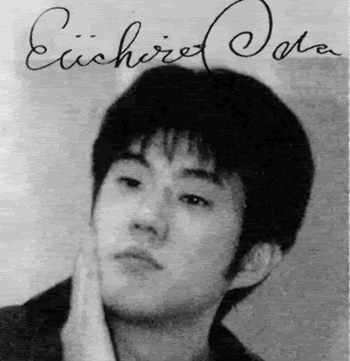
Eichiro Oda was born on January 1, 1975 in Kumamoto. During the start of his career he immediately started to berecognized. In 1992 he recieved the Jun-Nyuusen award which was given at the 44th Tezuka Awards for the One shot "WANTED". He won the award at the age of 17. His career kicked off with his piece entitled "Kari Kara Mirai No Present" which was featured in Shuisha Jump's October 1993 issue. Later onwards, he recieved the Nyuusen award, (which was the top notch easily put) at the Hop-Step Awards. In 1994, Oda headed to Tokyo and became an assistant to many popular Jump mangaka's such as Shinobu Kaitani, Masaya Tokuhiro, and Nobuhiro Watsuki. But, he also went to college there for a year and sudied architecture. During this training period Oda published two short stories: Monsters in 1994 and the first two versions of Romance Dawn in 1996. These were featured in the Autumn and Summer Special of the now called Akamura Jump. Finally, Oda got his big break as Jump published the second version of Romance Dawn in 1996, Issue #41. And pretty soon One Piece was on it's way.


Oda-San worked for an assistant for Watsuki-Sensei on Rurouni Kenshin. In the Kenshin Kaden artbook, this drawing of his, along with a note for Watsuki was published.His One Piece sign also appeared on a cannon ball that Sanosuke kicks out of a guy in Volume 19, ch 161 of Rurouni Kenshin.


Oda admires Akira Toriyama a LOT! In the One Piece COLORWALK they had a talk with Oda and Toriyama. In 2003, Shonen Jump licensed One Piece. in Issue #3 of the SJ issue they had an interview with Oda san. The interview had some nice questions, a brief Bio, and some cool images of Oda’s workplace!


source: GumGum.org (Article), and Google Image Search (Pictures).

"One Piece! : Let's Go Treasure Hunting! Arr."

"One Piece! : Let's Go Treasure Hunting! Arr."
Monkey D. Luffy and the Staw Hat Pirates

One Piece (ワンピース) is a long-running shōnen manga written and illustrated by Eiichirō Oda, that has been serialized in Weekly Shōnen Jump magazine since August 4, 1997. The individual chapters are being published in tankōbon volumes by Shueisha, with the first released on December 24, 1997 and 53 volumes released as of March 4, 2009. One Piece follows the adventures of Monkey D. Luffy, a 17-year-old boy, who gained supernatural abilities by eating a magical fruit, and his ragtag crew of heroic pirates, named the Straw Hats. Luffy's greatest ambition is to obtain the world's ultimate treasure, One Piece, and thereby become the next King of the Pirates. When creating the series, Oda was heavily influenced by the manga Dragon Ball.


One Piece Shonen Jump

One Piece is licensed for an English language release in North America by Viz Media. The individual chapters are being serialized in Viz's Shonen Jump manga anthology and being published in tankōbon volumes. In the United Kingdom, the series was being released by Gollancz Manga, it is now released by Viz Media along with all of their other manga previously released by Gollancz Manga. Madman Entertainment is releasing the series in Australia and New Zealand.


"The Treasure Hunting Begins!"


Gold Roger


There once was a man named Gold Rodger, a pirate, and he was given the glorious title: 'King of the Pirates' for possessing the legendary treasure, One Piece. He had fame, fortune, and power, until one day, he caught and brought to the execution tower to be executed. These were his last words, “My fortune is yours for the taking, but you have to find it first. I left everything I owned in One Piece”.

From that day on, pirates from all around the world sailed to the Grand Line in search of One Piece the treasure that would make their dreams of fame and fortune come true. But no one has ever found the location of Gold Roger's treasure, and the Grand Line is too dangerous of a place to overcome as they were just pirates without any special skills.


Shanks and Luffy


22 years after Gold Rodger’s death, a boy named Monkey D. Luffy wanted to give a shot at finding the legendary treasure as he had the vision of becoming the King of Pirates ever since he was a little boy. With inspiration of his idol, the deceased Gold Rodger, and the help of from his role-model, 'Shanks' of the Red Hair Pirates, Luffy sets out and finds a crack team of special people to help him on his arduous quest.
source: Wikipedia.org and One Piece Encyclopedia (Article), Google Image Search (Pictures).
Friday, June 5, 2009

"Takeshi Konomi : The Coach of Ryoma Echizen..."


Ryoma Echizen Sketch By: Takeshi Konomi


"Takeshi Konomi : The Coach of Ryoma Echizen..."


Takeshi Konomi (許斐剛, Konomi Takeshi, born June 26, 1970) is a Japanese mangaka. He owns a cat called Kahluamilk who he uses to assist him in drawing "Karupin", a character in his "The Prince of Tennis". He has said that bathing inspires him to think of new ideas for manga.


Takeshi Konomi


Every year the Japanese National Tax Administration Agencyreleases a list of the highest income tax payers for entertainers in Japan. The higher someone's income tax, the higher their actual presumed earnings, however it is possible for a person to have paid more taxes than another person who made more money. Takeshi Konomi placed number nine on this list in 2002.


source: Wikipedia.org (Article).

"Serve It! : Prince Of Tennis..."

"Serve It! : Prince Of Tennis..."

Prince Of Tennis Gang

The Prince of Tennis (テニスの王子様) is a popular Japanese shōnen manga series written and illustrated by Takeshi Konomi. The title is often shortened to TeniPuri (テニプリ), a portmanteau of the two parts in the Japanese pronunciation of the words "Tennis Prince".

The manga was first published in Japan in Shueisha's Weekly Shōnen Jump in July 1999, and ended publication on March 3, 2008. A total of 379 chapters were serialized, spanning 42 volumes. As of volume 40, the manga has sold over 40 million copies in Japan. News that a sequel to the manga series was going to be developed was announced in the December issue of the Japanese manga magazine Jump Square. The new manga series, entitled New Prince of Tennis, began serialization in the Jump Square magazine on March 4, 2009, with the story taking place several months after the end of the original manga. Viz Media acquired the license to distribute the series in English in North America.


Prince of Tennis Manga Cover

The manga was adapted into an anime series directed by Takayuki Hamana, animated by Trans Arts and co-produced by Nihon Ad Systems and TV Tokyo. The anime aired across Japan on the anime satellite television network Animax and the terrestrial TV Tokyo network from October 10, 2001 to March 30, 2005, spanning a total of 178 episodes, as well as a theatrical movie. In April 2006, an original video animation (OVA) continuation of the anime began to be released on DVD. The beginning of the second OVA series was released on June 22, 2007, roughly 3 months after the end of the first. The second OVA ended on January 25, 2008, and the third and final OVA started on April 25, 2008.


"This Is Where The Game Begins!"

Ryoma Echizen
Taking place in Tokyo today, it follows the journey of Ryoma Echizen, who is a a tennis prodigy. He enrolled to a school called Seishun Academy Middle School (Seishun Gakuen), or in short Seigaku, a school famous for its strong tennis club and talented players. Because of his cool and apathetic attitude, upperclassmen challenge him to play tennis. However, Ryoma had won the American junior tennis championship tournaments four times in a row, and easily defeated the upperclassmen.


The Seigaku Tennis Club
Making new friends and learning new tennis tactics, Ryoma and the Seigaku tennis club strive to win the All-Japan junior high tennis team championship tournament.
source: Wikipedia.org and Minitokyo .net (Article), Google Image Search (Pictures).

"Nagaru Tanigawa : The Maestro of Haruhi Suzumiya..."


"Nagaru Tanigawa : The Maestro of Haruhi Suzumiya..."

Nagaru Tanigawa is a Japanese author, best known for his Haruhi Suzumiya light novel series.

After graduating college, Tanigawa actually became the manager for a women's clothing shop, during which time he published his debut in the mangabon Dengeki Moeou in 2003, titled "Dengeki!! Aegis 5 - Shield and Sheep." In that same year he published other works: in Dengeki Bunko he published the first chapter of Gakeou wo Deyou! (Let's Leave School!), and in The Sneaker he published the first chapter of Suzumiya Haruhi no Yuuutsu, or The Melancholy of Haruhi Suzumiya, which would become his most widely acclaimed work (so far). As of May 2008, the Haruhi series has sold over 5 million books. The series is still ongoing.


Nagaru Tanigawa

Tanigawa was heavily influenced in his middle school days by sci-fi and juvenile authors, particularly Vampire Hunter D author Hideyuki Kikuchi and Onmyouji author Baku Yumekura. He was also influenced by being a victim of the Great Hanshin Earthquake, which took place on January 17, 1995.

Tanigawa is a fan of the Hanshin Tigers and his hobbies are biking and mahjongg.


source: AnimeVice.com (Article) and Google Image Search (Pictures).

"See the Real Music : The Melancholy of Haruhi Suzumiya..."

"See the Real Music : The Melancholy of Haruhi Suzumiya..."
The S.O.S Gang

Haruhi Suzumiya (涼宮ハルヒ) is the general name for a series of light novels written by Nagaru Tanigawa and illustrated by Noizi Ito. The first novel was published in Japan on June 6, 2003 by Kadokawa Shoten, with nine individual novels published and a planned tenth as of April 1, 2007. The story follows the titular character, Haruhi Suzumiya, a young high school girl who can unconsciously change reality, and her strange antics with her school club, the SOS Brigade.
Haruhi Suzumiya Manga Cover
The light novels have been adapted into three separate manga series, three video games, and a television anime adaptation. After the anime adaption aired in 2006, publishing company Kadokawa Shoten received various offers licensing both the novels and its various adaptations. The novels are licensed for English language release in the United States by Little, Brown Books for Young Readers and Yen Press and the anime adaptation was licensed for North American distribution by Kadokawa Pictures USA division, which then sublicensed production and distribution to Bandai Entertainment.

"The Start of The Music..."

Kyon

Kyon, your typical high school student, has long given up his belief in the supernatural. However, upon meeting Haruhi Suzumiya, he quickly finds out that it is the supernatural that she is interested in; aliens, time travelers and espers among other things. When Haruhi laments about the lack of intriguing clubs around school, Kyon inspires Haruhi to form her own club.
The S.O.S Brigade

As a result, the SOS Brigade is formed, a club which specializes in all that is the supernatural.Much to his chagrin, Kyon, along with the silent bookworm, Yuki Nagato, the shy and timid Mikuru Asahina, and the perpetually smiling Itsuki Koizumi, are recruited as members. The story follows the crazy adventures that these four endure under their whimsical leader, Haruhi. The story is based on the light novels by Nagaru Tanigawa.
source: Wikipedia.org and MyAnimeList.Net (Article), Google Image Search and Minitokyo.net (Pictures)

"Tsugumi Ohba and Takeshi Obata : The Suspects of Creating the Death Note..."

"Tsugumi Ohba and Takeshi Obata : The Suspects of Creating the Death Note..."

"Tsugumi Obata: The Mysterious Author..."

Tsugumi Ohba (大場つぐみ ) is the author/mangaka of the manga series, Death Note. It is widely speculated that this is a pen name. As mentioned in the Death Note panels, he/she was born in Tokyo, has a hobby of collecting teacups, and develops manga plots day and night on a chair while holding his knees in a way reminiscent of a character in Death Note, L.
Tsugumi Ohba
Based on the information page on deathgod.org, it is strongly believed that Tsugumi Ohba is actually Hiroshi Gamou, author of the JUMP series Tottemo! Luckyman. It is speculated that he chose to hide his identity due to the fact that the Death Note series is very different from his past work. Gamou was born on August 17, 1962 in Tokyo Japan and has blood type B. Some of Gamou's previous assistants included Murata Yuichiro (Eyeshield 21) & Nishi Yoshiyuki (Muhyo & Rosie).


Death Note Cover


"Takeshi Obata : The Bicycle Lover..."


Takeshi Obata was born on February 11, 1969. He is 174 cm tall, 53kg (at the time of Hikaru No Go), blood type AB. In general, Takeshi is famous for his art, as he collaborates with writers. Some of his works include Hikaru No Go (with Yumi Hotta from 1998 to 2003/04), Ayatsuri Sakon (with Sharakumaro), and Arabian Majin Bokentan Lamp Lamp (with Susumu Sendo).


Takeshi Obata


He was sensei to Nobuhiro Watsuki ( Rurouni Kenshin ) and stated in an interview, that he has about 5-6 assistants at a time. For coloring, Obata uses Copic (alcohol based) markers, from the lightest to darkest shades. After the completion of Hikaru No Go, Takeshi paired up with Ohba, and worked on Death Note. His brilliant artwork is known almost to everyone, and sadly, not much is known about him… He likes riding his bicycle .

source: Death Note Anime.com and Deathgod.org

"Death Note: With Just One Write, You'll Die."

"Death Note: With Just One Write, You'll Die."
Death Note Cast
Death Note (デスノート,) is a Japanese manga series created by writer Tsugumi Ohba and illustrator Takeshi Obata.

Death Note

Death Note was first serialized in 108 chapters by Shueisha in the Japanese manga magazine Weekly Shōnen Jump from December 2003 to May 2006. The series was also published in tankōbon (paperback) format in Japan starting in May 2004 and ending in October 2006 with a total of twelve volumes. The series was adapted into live-action films released in Japan on June 17, 2006, on November 3, 2006, and on February 2, 2008. The anime series aired in Japan from October 3, 2006, to June 26, 2007. Composed of 37 episodes, the anime was developed by Madhouse and directed by Tetsuro Araki. A light novel based on the series, written by Nisio Isin, was released in Japan. Additionally, various video games have been publisher by Konami for Nintendo DS.

The Start of Deaths:

The Death Note Notebook Falling...

Light Yagami is a 17-year old kid who's top in his class yet has a pretty normal life aside from his incessant studying. One day his eyes fall over a notebook laying on the ground outside of his school. Reading the English cover, "Death Note," and noticing that the writing inside is also in English, Light decides to take it home to read it. Within the next 5 days, Light has already killed many just by watching and recording names of criminals from the news.


Light Yagami Writing on the Death Note..


The Death Note enables him to kill anyone whose face and real name is known. To know more about the rules of the notebook read the terms of the Death Note. Picking up the notebook once more, a monstrous creature appears and speaks to Light, introducing himself as a Shinigami (God of Death) named Ryuk. Ryuk tells Light that only the owner of the Death Note can see him and that he, Light, is now the owner of it and may use it as he chooses. If Light does not want to keep the notebook, he may give it to someone else and Ryuk will erase all related memories from his mind. The notebook bonds both Light and Ryuk, but any mental pain will be delivered to Light alone. He then decides that no matter what it takes, no matter who gets involved, Light will cleanse the world of evil criminals. Although Light is doing a pretty good job gathering up bad guys, when he is interrupted by a top detective by the label "L."


source: Death Note Anime.com and Wikipedia.org (Article), Google Image Search and Minitokyo.net (Pictures).

"Masashi Kishimoto : Naruto's Real Master..."


"Masashi Kishimoto : Naruto's Real Master..."

Masashi Kishimoto (born November 8, 1974) is the author of the famous manga "Naruto". He debuted as a mangaka with his work "Karakuri", which was submitted to Shueisha in 1996. Beginning with 1999, his next work "Naruto" was serialized in the Weekly Shonen Jump manga magazine. Kishimoto had received the Hop Step Award, which was an award given to new artists once a month by Shonen Jump.

Kishimoto's first work as a manga artist was Karakuri, which he submitted to Shueisha in 1996. In 1999, Naruto was serialized in Weekly Shōnen Jump, winning its monthly "Hop Step Award". Naruto is still ongoing, with more than 45 volumes and just over 44 released in English, and has sold over 71 million copies in Japan and over 93 million copies worldwide as of volume 36, also being adapted into two successful anime series. The Naruto manga series has become one of Viz Media's top properties, accounting for nearly 10% of all manga sales in 2006. The seventh volume of Viz's release became the first manga to ever win a Quill Award when it claimed the award for "Best Graphic Novel" in 2006. In his interviews and exclusively in the Naruto manga, he commonly mentions his deceased plant, Ukki-kun. According to Kishimoto, the first time he had an office plant, due to missing the country atmosphere, he fed it undiluted plant food. He continued purchasing several other plants afterwards, but many of them perished.


Masashi Kishimoto


In closing, what advice would you give to fans who are interested in becoming artists themselves?

"Creating manga isn't just about drawing well, but writing a good
story. Keep the art and story real, and you can't lose. Also, watch a lot of
good Hollywood movies. Those who rail against the entertainment industry are just being close-minded."
- Masashi Kishimoto (An Interview with the Shonen Jump.)


source: Naruto Central and Wikipedia.org (Article) , Google Image Search (Pictures).

" Naruto : The Welcome To The World of Ninjas!"

" Naruto : The Welcome To The World of Ninjas!"
Naruto Gang

Naruto is an anime and manga series created by Masashi Kishimoto centered around a loud, hyperactive, young ninja who is in a constant search for both approval and recognition, and with a great aspiration to become Hokage. First published as a manga series in Japan by Shueisha in the 43rd issue of Shonen Jump magazine in November 1999, the Naruto series has risen in popularity exponentially and has since been licensed in the USA (becoming VIZ Media's top selling title) and nearly two dozen other countries, with the anime series currently airing in 18 countries.

Naruto: Shonen Jump Cover


Although the anime series debuted on TV in Japan on October 3rd, 2002 nearly three years after the manga series first appeared it has quickly caught up, as each episode can cover up to two chapters. To prevent the series from being pulled off of the air and cancelled completely with no official story to base it upon, as had been the fate (and death) of other anime such as Rurouni Kenshin, the decision was made to produce original content for the anime series to allow the manga time to get far ahead and keep Naruto fresh in the minds of its many fans. Starting with episode 136 there has been over a years worth of filler episodes which tend to cover the supporting characters of Naruto who may not otherwise be seen often. New episodes of Naruto air every Wednesday night during the Golden Time slot at 7:27PM, and movies based upon the Naruto anime series have been released every Summer since 2004.


The Story of A Ninja:


The Village...

Twelve years before the start of the series, a Kyuubi (nine-tailed fox demon) attacked the Hidden Leaf Village. A swing of one of it's mighty tails could raise tsunamis and flatten mountains, chaos reigned throughout the village as it killed many people, until the leader of the Leaf, the Fourth Hokage, defeated it by sacrificing his own life to seal the demon inside a new born child, that child is Uzumaki Naruto. The Fourth Hokage would forever be celebrated as a hero for sealing the Kyuubi and saving the entire village. It was his wish that Naruto would also be respected in the same way he would be, however, this was not the case. Everybody in the village avoided Naruto, regarding him as nothing more than the evil demon fox. The Third Hokage made it a rule within the village that other villagers were forbidden from mentioning this event to anyone, even their own children, however because of the way their parents treated Naruto, they mistreated him as well throughout most of his childhood.


Naruto as a baby...


As a result of this Naruto grew up as a lonesome orphan, without friends, family, or acknowledgement of any sort. Nobody would pay any attention to him, so he sought attention in the only way he knew how, through pranks and mischief. However, Naruto's behaviour would come to change after graduating from the Ninja Academy by learning the technique of the Kage Bunshin no Jutsu to save his sensei Umino Iruka from certain death. Naruto learnt two things that day, that the Kyuubi was contained inside him, and that there was someone who cared about him, and understood how he felt. His graduation would become a changing moment and define his world for the rest of his life.


source: NarutoFan.com (Article) , Google Image Search and Minitokyo.net (Pictures)

"Tite Kubo : The Master Behind The Anime, Bleach."

"Tite Kubo : The Master Behind The Anime, Bleach."


Kubo Tite is the creator of the spectacular manga and anime series called 'Bleach', He also is the creator of the manga series 'Zombie Powder'. Kubo is recognized as being the creating of Bleach as it has sky rocketed to the top and is one of the most popular animes in Japan. He was born on June 26, 1977 and grew up watching Dragon ball and Akira which Inspired not only Kubo to want to be a Manga artist but also Naruto's creator Masashi Kishimoto.

Although hard to believe, it wasn't always easy for Kubo as he wrote Zombie Powder while still in high school but do to lack of popularity Zombie Powder was cut after only 4 volumes which was an emotional blow to Kubo. Shortly after Kubo starting writing a new manga ,as we know now as Bleach, and sent it to the weekly Shonen Jump but all his dreams were crushed after 'bleach' was rejected as it was said to be to similar to Yu-Yu Hakusho. Akira Toriyama, Creator of Dragon Ball, Happened to read the manga that kubo had submitted and had heard that it was rejected. Akira quickly mailed Kubo and with this letter Kubo was able to get confidence back to himself and was once again inspired to write.


Tite Kubo
Shortly after the letter from Akira Toriyama the first volume of Bleach was published in Japan on the 5th of January, 2002. Bleach began to publish weekly (and even now it even does). Bleach is now published in the weekly Shonen Jump with the top manga's in Japan, Naruto, One Piece, Prince of Tennis, Hunter X Hunter, Death Note and where Dragon Ball was once published itself.
source: Bleach Exile, (Article) and Google Image Search (Pictures)

"My BLEACH Review..."

"My BLEACH Review..."

The Bleach Gang

Storyline:


Soul Society


The story was really fantastic! Especially the story in which the gang of Ichigo Kurosaki were in the Soul Society to save Rukia Kuchiki. The imagination of the creator, Tite Kubo was really wide! The product of his wide imagination is this wonderful anime. What I really like in this anime, is that the story doesn't only focus on one genre, but they uniquely put all in just anime, Comedy, Drama, Action, Fantasy, hmm... some Horror, and the most that I really like is the Romance, meaning, Love Story.


Rukia and Ichigo

Speaking of Love Story, many loveteams were introduced in the series, namely, IchiRuki (Ichigo and Rukia), IchiHime (Ichigo and Orihime), RenRuki (Renji and Rukia), HinaHitsu (Hitsugaya and Hinamori), and UryuHime (Uryuu and Orihime). Some Bleach-lovers also made their own pairings, like, YoruKisu (Yoruichi and Kisuke) and many more.


Rating: 4 Stars. ^-^

Sounds/Music:


Orange Range


Rie Fu


UVERworld


The theme songs were really awesome! The singers of these songs were really huge, in other words popular! Like Rie Fu who sang: "Life is Like A Boat", Orange Range who sang : "Asterisk", and especially UVERworld who sang: "D-Tecnolife", there were many singers so I can't tell them all. The emotions of each song were connected to the series. Some songs were happy, sad, romantic, inspirational, and sometimes can make you dance! The background music were also cool, especially when there is a battle between shinigamis.

My Favorites: D-Tecnolife, Life is Like a Boat, Happy People, Asterisk, and Rolling Star.


Rating: 5 Stars. ^-^

Graphics:


Zangetsu , Zanpakuto of Ichigo Kurosaki

Ichigo Kurosaki

Another thing that makes BLEACH be love by many is the graphics. This was the reason why I always go "Wow!" while watching this anime. The way they drew the Zanpakutos of the Shinigamis were really great! They look real! Ahehe. The looks of the characters really caught my attention. Hmm... I think every episode they change clothes, but in some episodes I think they don't.

Rating: 3 Stars. ^-^

~ Note: The review was written by me, cutiegurl022. I am not allowing anyone to copy my article unless they accredited it to me.

Thursday, June 4, 2009

"Osamu Tezuka: Father of Manga and Anime"

"Osamu Tezuka: Father of Manga and Anime"


When Osamu Tezuka died in 1989, Japan's leading newspaper published a moving editorial remembering the Father of Modern Manga Anime. "Foreign visitors," the editor said, "often find it difficult to understand why the Japanese people like comics so much. One explanation is that Japan had Osamu Tezuka, and other nations did not."

Osamu Tezuka is responsible for the Japanese comics and animation we all know and love. Everything about it - the big eyes, the spiky hair, and the edge-of-your-seat storyline - came from him. He was a doctor by profession, but he made a career out of his childhood hobby instead. In 1947, he published New Treasure Island, which was unlike any comic anyone had ever seen before. His other works, including Kimba the White Lion and Astro Boy, are classics. All in all, he produced nearly 150,000 pages of drawings, and he inspired the next generation of anime and manga artists who would take his art form to a new level.

source: K-Zone Magazine (March 2005 Issue) and Wikipedia.org (Picture.)

"The WorLD of AniMe"

"The WorLD of AniMe"


Anime (アニメ) , an abbreviated Japanese pronunciation of "animation", pronouned is animation originating in Japan. The rest of the world regards anime as "Japanese animation". Anime originated about 1917.Anime, like manga (Japanese comics), is extremely popular in Japan and well known throughout the world. Distributors can release anime via television broadcasts, directly to video, or theatrically, as well as online.Both hand-drawn and computer animated anime exist. It is used in television series, films, videos, video games, commercials, and internet-based releases, and represents most, if not all, genres of fiction.


History:


Anime began at the start of the 20th century, when Japanese filmmakers experimented with the animation techniques also pioneered in France, Germany, the United States, and Russia. The oldest known anime in existence was screened in 1917 - a two minute clip of a samurai trying to test a new sword on his target, only to suffer defeat. The first talkie anime was Chikara to Onna no Yo no Naka, released in 1933.


By the 1930s, animation became an alternative format of storytelling to the underdeveloped live-action industry in Japan. Unlike in the United States, the live-action industry in Japan remained a small market and suffered from budgeting, location, and casting restrictions. The lack of Western-looking actors, for example, made it next to impossible to shoot films set in Europe, America, or fantasy worlds that do not naturally involve Japan. Animation allowed artists to create any characters and settings.

The success of Disney's 1937 feature film Snow White and the Seven Dwarfs influenced Japanese animators. In the 1960s, Osamu Tezuka adapted and simplified many Disney animation techniques to reduce costs and number of frames in the production. He intended this as a temporary measure to allow him to produce material on a tight schedule with inexperienced animation staff.

The 1970s saw a surge of growth in the popularity of manga—which were often later animated—especially those of Osamu Tezuka, who has been called a "legend" and the "god of manga". His work and that of other pioneers in the field, inspired characteristics and genres that are fundamental elements of anime today. The giant robot genre (known as "Mecha" outside Japan), for instance, took shape under Tezuka, developed into the Super Robot genre under Go Nagai and others, and was revolutionized at the end of the decade by Yoshiyuki Tomino who developed the Real Robot genre. Robot anime like the Gundam and Macross series became instant classics in the 1980s, and the robot genre of anime is still one of the most common in Japan and worldwide today. In the 1980s, anime became more accepted in the mainstream in Japan (although less than manga), and experienced a boom in production. Following a few successful adaptations of anime in overseas markets in the 1980s, anime gained increased acceptance in those markets in the 1990s and even more in the 2000s.

source: wikipedia.org (article), google image search (pictures)